Skip to content
No results
  • Home
  • Articles
  • About
  • Contact
MTGTactical
  • Home
  • Articles
  • About
  • Contact
MTGTactical
  • Mulligans & Resources

When Should You Crack a Fetch Land?

Bright fantasy landscape of a traveler in a white coat holding a glowing card while overlooking winding rivers, waterfalls, forests, snowy peaks, and red rocky mountains.

Crack a fetch land when you need its mana or can create an immediate payoff. Otherwise, holding it preserves information, color choice, and valuable timing options.

  • Brian Boothe
  • October 16, 2026
  • Interaction & The Stack

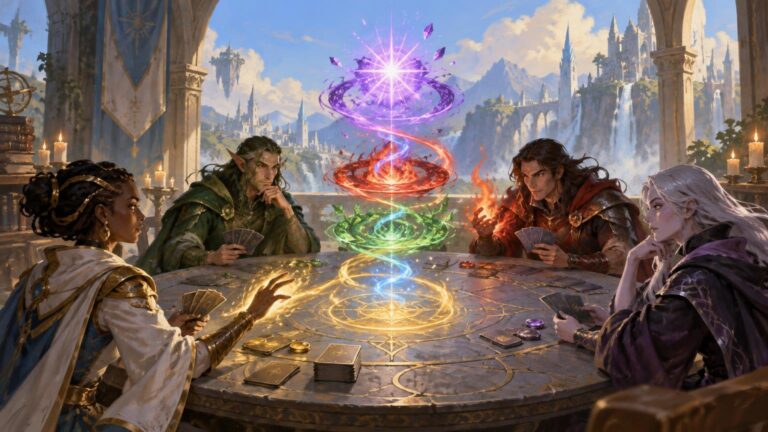
How Multiple Triggers Go on the Stack: APNAP Explained for Players

Four fantasy players sit around a circular table holding cards as colorful rings of magic rise in a vertical sequence above the table, framed by a bright castle landscape and waterfalls.

APNAP determines how simultaneous triggers controlled by different players enter the stack. Learn the table procedure, resolution order, and tactical consequences.

  • Brian Boothe
  • October 14, 2026
  • Competitive Play

How to Review a Misplay After a Match

Bright painterly fantasy scene of a thoughtful woman holding a card at a tabletop game, with miniature figures, card piles, and a glowing arc of magic leading toward a horned creature; a white castle and waterfalls fill the background.

A practical method for isolating a suspected Magic misplay, judging it from the information available at the time and creating a correction for future games.

  • Brian Boothe
  • October 11, 2026
  • Commander Tactics

When Should a Commander Go to the Graveyard Instead of the Command Zone?

Armored fantasy commander kneels beside a glowing grave, between a sunlit citadel and a purple ghost-filled cemetery.

The command zone is usually the safe choice when your commander dies. Leave it in the graveyard only when a specific, near-term line offers more value than a protected command-zone recast.

  • Brian Boothe
  • October 9, 2026
  • Mulligans & Resources

When Is the Best Time to Cast a Tutor in MTG?

Painterly fantasy scene of a hooded mage consulting a glowing open book on a stone table, with colored magical trails leading toward a dark fortress, a bright castle, a tree-covered realm, and a guarded citadel in the distance.

Cast a tutor at the latest point that still lets you solve the next important problem. Use urgency, destination, information, mana, and protection to choose the exact window.

  • Brian Boothe
  • October 5, 2026
  • Mulligans & Resources

Should You Keep a Reactive Opening Hand in Magic?

Bright painterly fantasy scene of a blue-robed mage holding three cards and casting a glowing shield against orange and purple magical bolts, with crystal pieces on a table and a sunlit castle city behind her.

Keep a reactive opening hand only when its answers are castable and relevant—and the hand has a credible plan for the turns those answers buy.

  • Brian Boothe
  • October 3, 2026
  • Mulligans & Resources

Should You Keep a Two-Land Hand in MTG?

Painterly fantasy scene of a thoughtful cloaked woman holding three cards at a stone table, with two glowing landscape cards in front of her and sunlit ruins, waterfalls, and towers behind.

A two-land opening hand is keepable when its colors work, it has meaningful early plays, and missing land three for a turn does not ruin its plan.

  • Brian Boothe
  • September 28, 2026
  • Interaction & The Stack

When to Remove a Creature Before Its Controller Untaps

Painterly fantasy scene of a robed mage using blue magic to dissolve a horned tree-like creature on a ruined stone terrace at sunset, with a distant city and waterfalls behind them.

You cannot cast removal during the untap step. Learn why the preceding end step is usually your last safe window and when acting earlier or later is stronger.

  • Brian Boothe
  • September 25, 2026
  • Interaction & The Stack

Ward, Hexproof, and Protection: How They Change Interaction

Painterly fantasy scene of a robed woman raising a glowing circular shield to block a swirling red magical attack amid sunlit white ruins and waterfalls.

Ward taxes targeted interaction, hexproof restricts opposing targets, and protection stops specific qualities in several ways. Here is how to choose and sequence your answer.
  • Brian Boothe
  • September 18, 2026
  • Gameplay Fundamentals

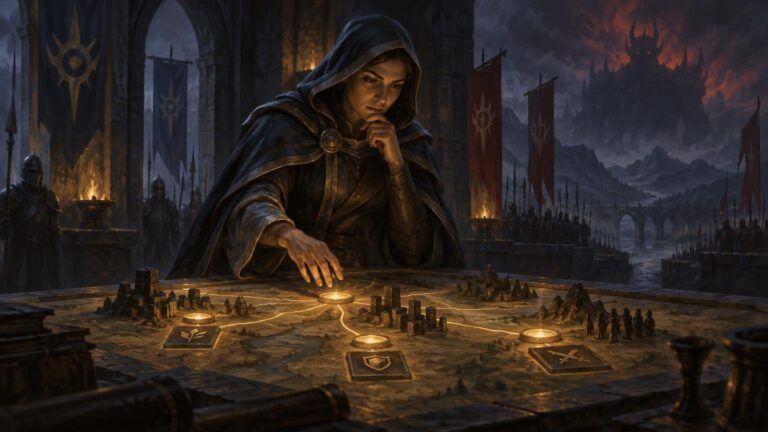
How to Improve at Magic: The Decisions That Matter Most During a Game

A hooded strategist studies a glowing tabletop battlefield marked with miniature buildings, tokens, and card-like markers, with soldiers, banners, and a dark fortress landscape behind him.

Improve your Magic decisions by making your plan, assumptions, alternatives, and reasons visible at every important point in the game.
  • Brian Boothe
  • September 18, 2026
  • Gameplay Fundamentals

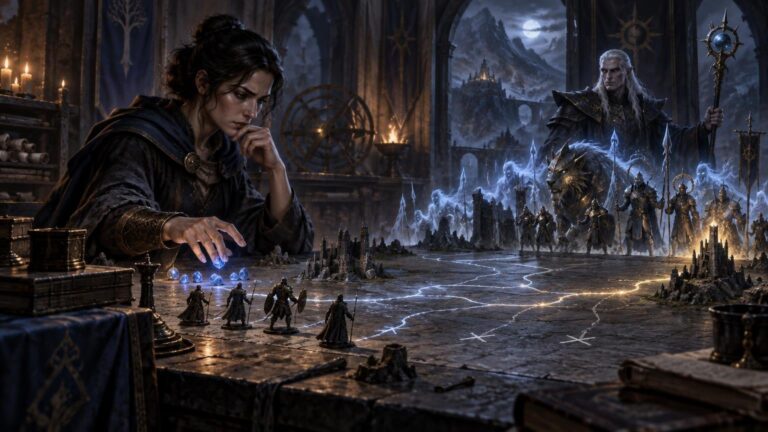
When Should You Concede a Game of Magic?

A dark-haired mage studies a glowing tabletop battlefield while a white-haired opposing mage stands behind spectral soldiers, armored figures, and a lion-like creature beneath a moonlit castle.

Concede only after checking your realistic outs and deciding that continuing no longer improves your chance to win the game or match. This guide provides a practical test for making that decision.

  • Brian Boothe
  • September 18, 2026

Categories

  • Gameplay Fundamentals
  • Mulligans & Resources
  • Interaction & The Stack
  • Commander Tactics
  • Competitive Play

Latest Posts

  • When Should You Crack a Fetch Land?
  • How Multiple Triggers Go on the Stack: APNAP Explained for Players
  • How to Review a Misplay After a Match

Keep in Touch

Join the MTGTactical list for future articles and reading suggestions.

Privacy Policy

© 2026 MTGTactical

Information

  • About Us
  • Contact
  • Editorial Policy
  • Privacy Policy
  • All Articles